
Gutter Cleaning
Gutter Guards vs. Regular Cleaning: What Actually Protects a North Texas Roofline
Gutter guards are marketed as a way to skip cleaning altogether. Here's what they actually do — and don't do — for a North Texas home.
In this article
The Promise Behind Gutter Guards
Gutter guards are sold on a simple premise: install them once, and you'll never need to clean your gutters again. For homeowners tired of the seasonal chore, that's an appealing pitch. But the reality of how guards perform in North Texas conditions is more nuanced than the marketing suggests.
What Gutter Guards Actually Do
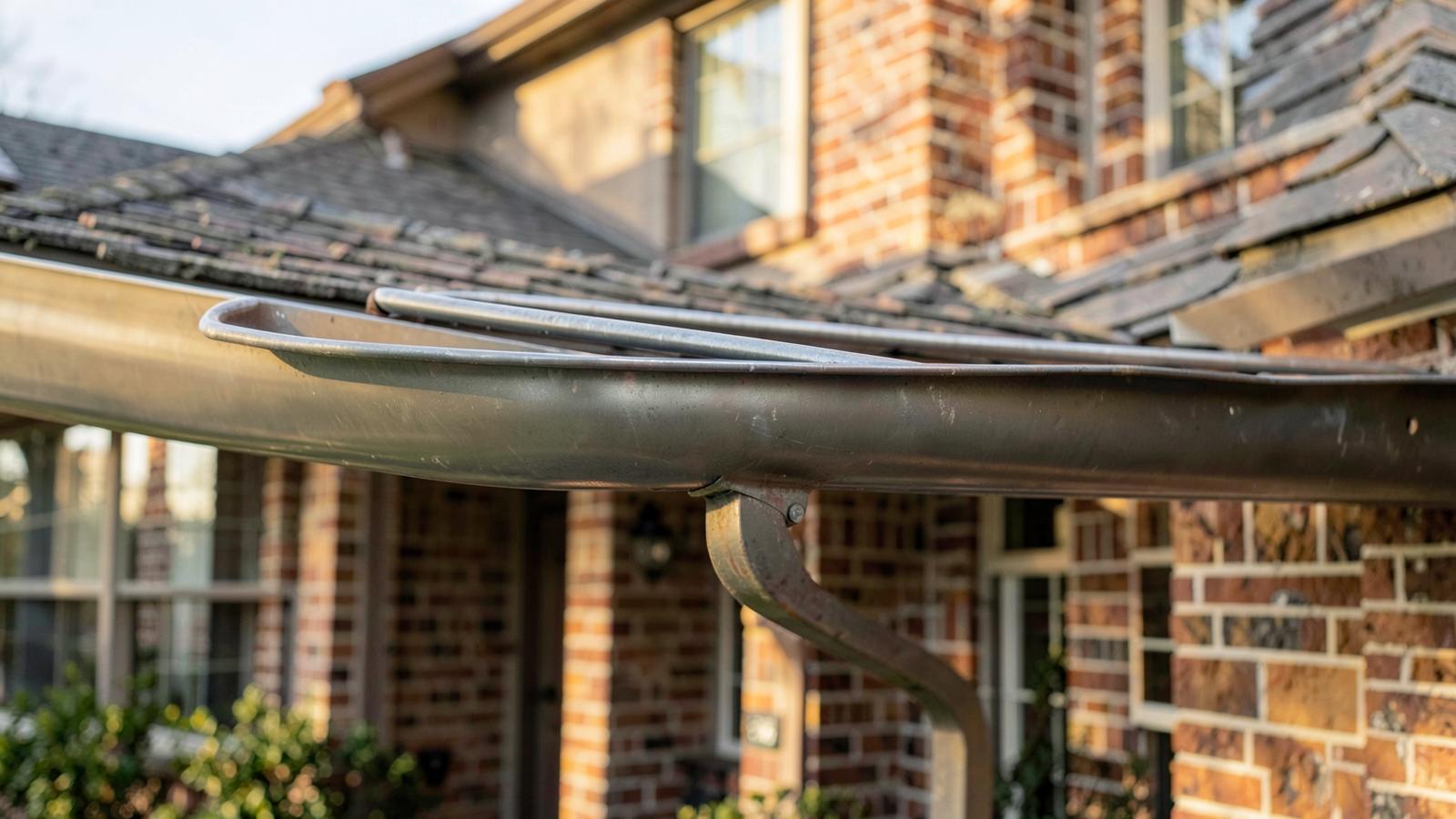
Guards are designed to block larger debris (leaves, twigs, larger organic matter) from entering the gutter channel while still allowing water to flow through. For homes under moderate tree cover, this can meaningfully reduce how much large debris accumulates. That part of the promise generally holds up.
The Main Types of Gutter Guards
Not all guards work the same way, and each has trade-offs.
- Screens: simple and affordable, they stop leaves but let smaller debris through, and debris can sit on top.
- Micro-mesh: blocks much finer material, but grit and pollen can coat the mesh and slow water flow.
- Reverse-curve or surface-tension covers: guide water around a curved edge into the gutter, but very heavy rain can overshoot them.
- Foam and brush inserts: sit inside the gutter and catch debris within themselves, which means they eventually need cleaning or replacing.
Where Guards Fall Short
What guards don't stop is smaller particulate: pine needles, seed pods, and especially the fine grit and pollen that's common throughout North Texas growing seasons. Over time, this finer material can still build up on top of or within the guard system itself, and because it's less visible than a gutter full of leaves, it often goes unnoticed until water starts overflowing anyway. Guards can also create a false sense of security. Many homeowners assume "guards installed" means "no more maintenance needed" and stop checking entirely, which is when problems compound unseen.
What North Texas Throws at Your Gutters
Our trees don't drop everything at once. Many shed in fall, while live oaks shed in late winter and spring as new growth pushes old leaves off. Pollen, catkins and seed pods follow, and asphalt shingles shed granules that settle in the channel over time. Add spring storms that bring down twigs and limbs, and gutters here face a steady supply of debris for much of the year, not just one autumn clean-up.
Signs Your Guarded Gutters Need Attention
- Water spilling over the edge during rain
- Streaks or stains on the fascia or siding below the gutters
- Plants, moss or debris visible on top of the guards
- Downspouts that drip slowly or not at all after a storm
- Water pooling near the foundation
Guards Don't Eliminate Maintenance, They Change It
The realistic expectation with gutter guards isn't zero maintenance; it's reduced-frequency maintenance. A home with guards installed still benefits from an annual check and light cleaning, even if it no longer needs the twice-yearly full clean-out that gutters without guards typically require.
What Cleaning Looks Like With Guards Installed
Depending on the system, cleaning may mean clearing debris from the surface of the guard, lifting sections where the design allows, and flushing the channel and downspouts. Some guards are designed to be serviced without removal and others aren't, so it's worth knowing which kind you have. Either way, gutter cleaning with photo-documented results lets you see that the downspouts run clear.
Are Guards Worth It for Your Home?
It depends on your canopy. Homes under heavy tree cover usually see the biggest benefit, because guards cut down on how quickly gutters fill. Homes with few trees may not need them at all. Before installing, ask how the guard is serviced, what the warranty covers, and whether the installation method affects your roof warranty. A good guard plus routine cleaning is often the best of both.
What We Recommend
For most North Texas homes, especially those with moderate to heavy tree coverage, we recommend gutter guards as a helpful addition rather than a replacement for professional cleaning. Pairing guards with an annual check and light cleaning catches the fine debris guards can't fully block, while still reducing the overall maintenance burden compared to unguarded gutters.
Timing Your Cleaning
Late fall, after most leaves have dropped and ideally before the first hard freeze, is a strong time for a cleaning. Homes under live oaks may also need attention after the spring shed. Our North Texas winter exterior checklist covers what else to schedule this season, and homeowners under heavy canopy should read why Southlake and Westlake homeowners book gutter cleaning before storm season.
Common Questions
Do gutter guards stop pine needles? Fine-mesh designs help, but needles and seed pods can still collect on top of the guard and need clearing.
How often should guarded gutters be cleaned? At least once a year for most homes, and more often under heavy canopy.
Can I clean guarded gutters myself? Guards make the job more awkward, and ladder work on a roofline carries real risk. If you're unsure how your system comes apart, leave it to a professional.
Topline Exteriors cleans gutters across North Dallas, the Fort Worth metro and the wider DFW service area. When your gutters are due, get Your price in 5 minutes.


About Topline Exteriors
A locally owned team caring for North Texas homes and properties.
Meet the teamKeep reading