
Property Management
How Often Should a Commercial Property Get Pressure Washed? A Guide for Facility Managers
There's no universal answer to pressure washing frequency — but there is a framework. Here's how to build a schedule that actually fits your property.
In this article
Why "Once a Year" Isn't a Real Strategy
Many commercial properties default to an annual pressure washing visit simply because that's the industry norm they've inherited, not because it's been evaluated against the property's actual conditions. The right frequency depends on a handful of specific factors, and for many properties, once a year significantly under-serves what the property needs to maintain its appearance and protect its surfaces.
The Factors That Actually Determine Frequency
Foot traffic volume. Retail entrances, office building lobbies, and high-traffic walkways accumulate grime far faster than a low-traffic loading area or side entrance.
Surface material. Light-colored concrete and stone show staining faster than darker materials, and porous surfaces like unsealed pavers absorb buildup more readily than sealed or non-porous surfaces.
Proximity to vegetation or water features. Properties with heavy landscaping, retention ponds, or fountains tend to develop algae and organic staining faster than properties without them.
Local traffic and industrial exposure. As with residential properties near major corridors, commercial buildings close to highways or industrial areas accumulate carbon-based residue at a faster rate than properties in quieter settings. Our post on Coppell and Irving properties explains how this plays out near the airport corridor.
A More Realistic Framework
Rather than a single annual visit, most commercial properties are better served by tiering their spaces: high-visibility, high-traffic areas (main entrances, storefronts, lobbies) on a quarterly cycle; moderate-traffic areas (parking structures, secondary walkways) semi-annually; and lower-visibility areas (loading docks, side exteriors) annually. This concentrates budget where appearance matters most for tenants, customers, and first impressions, while still maintaining the rest of the property on a reasonable cycle.
How to Audit Your Own Property
You can build a first-draft tier map in an afternoon.
- Walk the property in daylight and photograph each zone
- Rate each zone for foot traffic and visibility
- Note surface type: concrete, stone, pavers, painted or stucco walls
- Flag areas near landscaping, water features or roadways
- Assign each zone a tier, then compare against your current schedule
Most managers find at least one high-visibility zone that's been getting less attention than it needs.
Timing the Visits Through the Year
Spring after pollen season and fall after leaf drop are natural anchor points. Summer irrigation can leave mineral staining and algae near landscaping, so those zones may need a mid-season visit. In winter, avoid flatwork washing when a hard freeze is forecast, since water can freeze into a slick film on walkways. Our North Texas winter exterior checklist covers what to schedule now and what to wait on.
Beyond Concrete
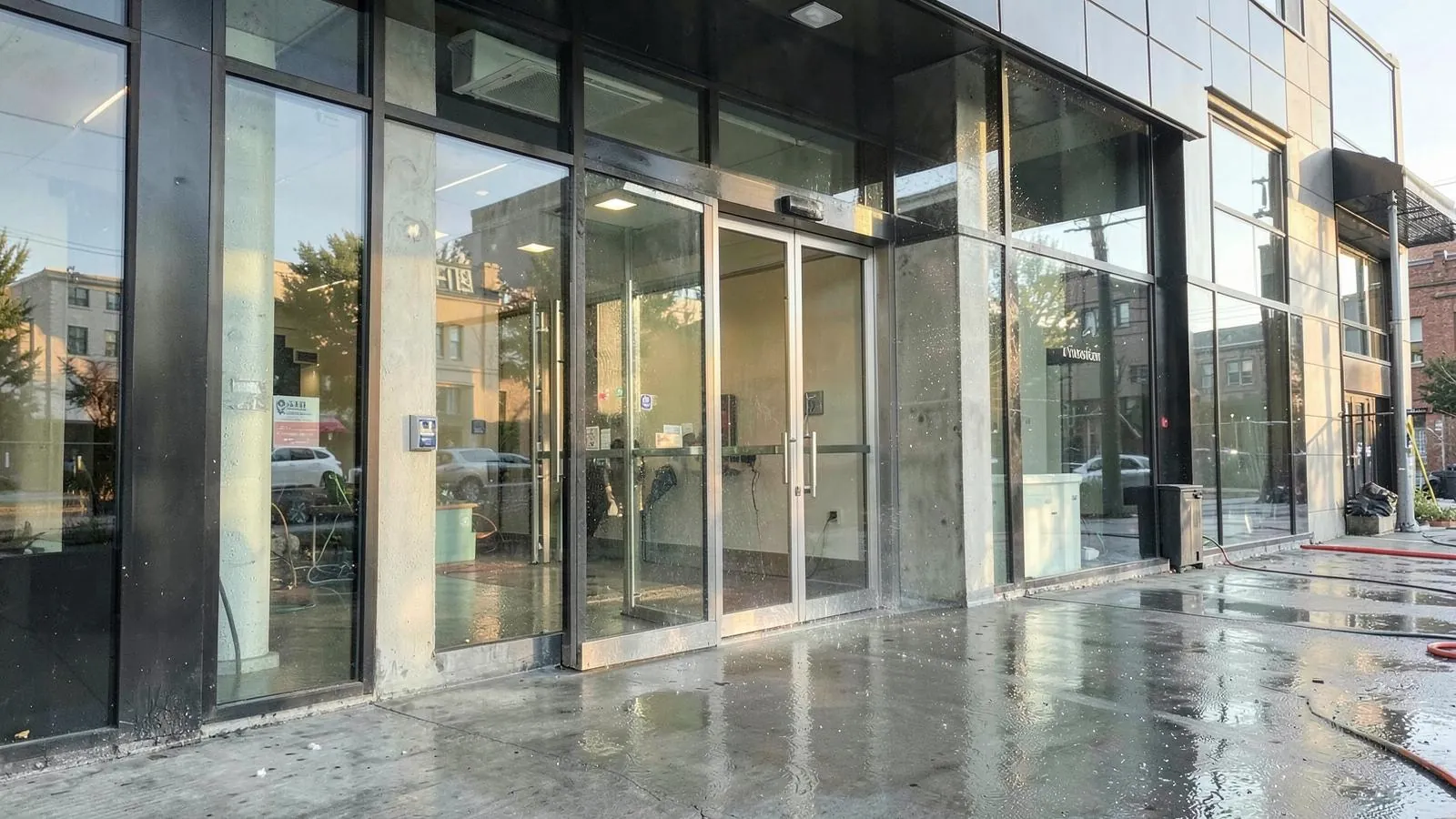
A clean entrance with dirty glass above it undermines the whole impression. Storefront and entry glass, canopies, and walls all benefit from being scheduled together with flatwork. Topline's crews handle window cleaning and pressure washing, so one team can cover the full entrance rather than splitting the work across vendors. For interior upkeep, see our janitorial cleaning.
A Note on Slip Hazards
Algae, mildew and built-up grime can make walkways slick, especially around landscaping and shaded areas. Regular cleaning supports a safer property, though it doesn't replace your own safety program. If you see a slick or discolored walkway, treat it as a priority zone.
Signs Your Schedule Is Falling Behind
- Visible staining returns within weeks of a cleaning
- Algae or mildew shows up on shaded or damp walkways
- Tenants or customers mention the entrance
- Pressure washing has become a reaction to complaints instead of a plan
- You're paying for restoration-level work at each visit
Measuring Whether It's Working
Photograph the same zones at the same time of year, before and after each visit. Over a few cycles you'll see which areas hold up and which need a shorter interval. Adjust your tiers based on what the photos show rather than the calendar.
Coordinating With Tenants and Customers
Entrances and parking areas are in use during business hours, so scheduling matters. Early-morning or after-hours visits, clear signage, and a plan for blocking and drying walkways keep operations running. Tell your provider about peak hours, events and delivery windows when you set the schedule.
Why Surface Type Changes the Method
Concrete, stone, painted walls, stucco and sealed pavers don't all tolerate the same pressure or the same solutions. A provider who matches the method to each surface protects your property while cleaning it, and will tell you when a surface calls for a gentler approach.
Building This Into Your Budget
The properties that manage this most efficiently build pressure washing into a recurring annual contract rather than requesting one-off service calls throughout the year. This typically costs less overall than reactive, as-needed scheduling, and ensures the property never falls far enough behind that a routine clean turns into a restoration project.
What to Put in a Recurring Contract
- Scope broken out by zone and tier
- Frequency for each tier
- Scheduling windows that avoid peak customer or tenant hours
- Photo documentation of completed work
- A certificate of insurance on request
- Clear notice and access procedures for your site
Start With a Schedule That Fits
Topline Exteriors works with facility and property managers throughout DFW as their commercial exterior maintenance partner. Talk with our team about a schedule for your portfolio and get Your price in 5 minutes.


About Topline Exteriors
A locally owned team caring for North Texas homes and properties.
Meet the teamKeep reading
Related posts

Seasonal
The North Texas Winter Exterior Checklist: What to Clean Now and What to Wait On
October 10, 2026 · 3 min read

Property Management
The Post-Construction Cleaning Checklist for Builders and General Contractors
October 10, 2026 · 3 min read

Trust & Credentials
What to Check Before You Hire a Professional Cleaning Company in DFW
September 12, 2026 · 5 min read