
Pressure Washing
Why Coppell and Irving Properties Face a Different Pressure Washing Challenge Than the Suburbs
Dense commercial corridors and mixed-use development create a cleaning challenge that quieter residential suburbs simply don't have. Here's what makes Coppell and Irving unique.
In this article
A Different Kind of Exposure
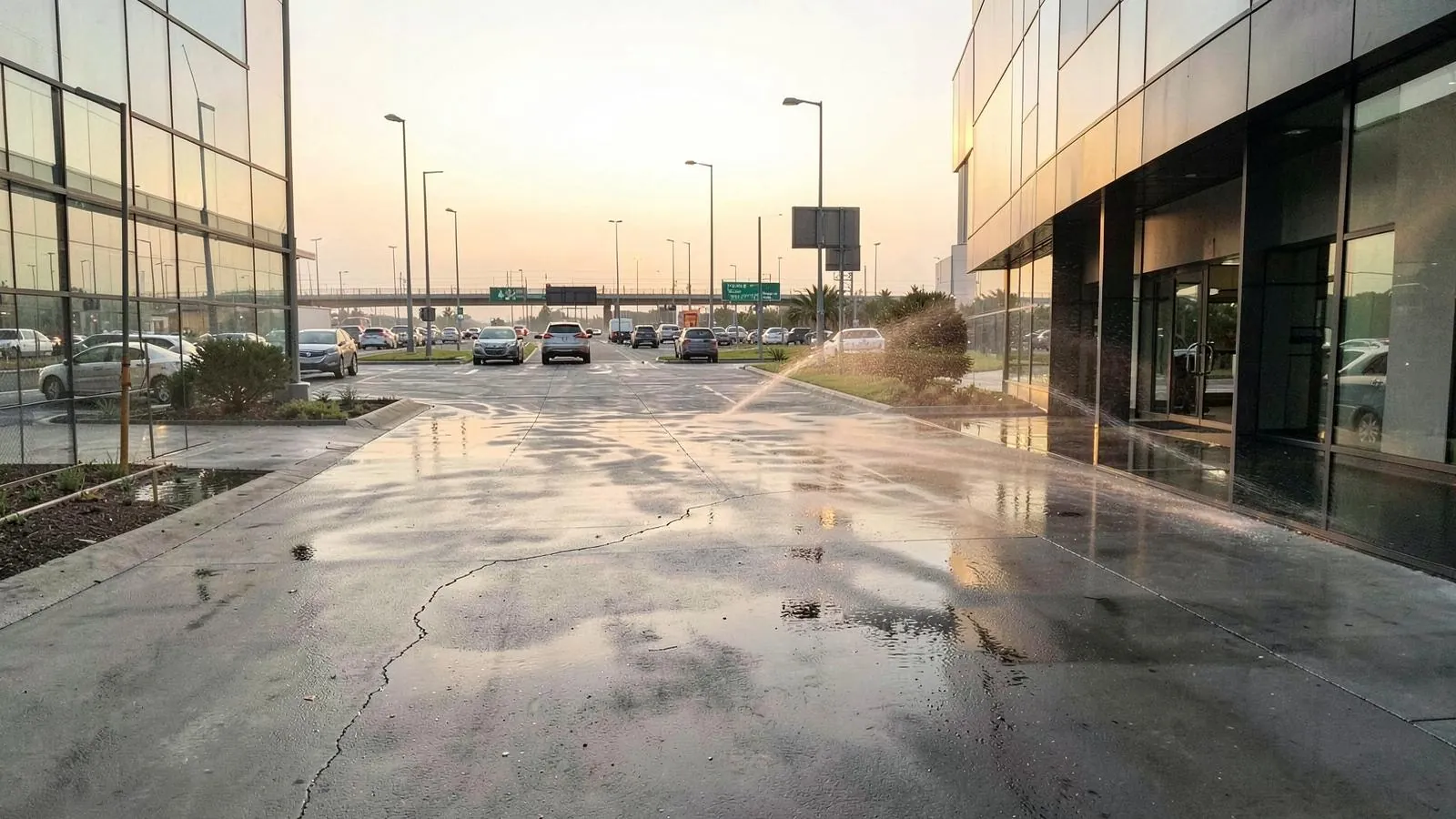
Coppell and Irving sit along some of the busiest commercial and transportation corridors in North Texas: proximity to DFW Airport, major highway interchanges, and dense business park development that surrounding residential suburbs don't share. Warehouses, hotels, corporate campuses and retail centers all share the same streets as homes and neighborhood shopping. That brings real advantages for homeowners and businesses alike, but it also means exterior surfaces here are exposed to a different mix of buildup than a quiet residential neighborhood further from major infrastructure.
What Traffic and Airport Proximity Actually Deposit
Vehicle exhaust residue, road grime carried by wind off nearby highways, and airborne particulate from heavy air traffic all tend to settle onto exterior surfaces at a higher rate in these areas. Concrete driveways, walkways, and building facades accumulate a fine layer of carbon-based residue that's different from the pollen- and organic-matter buildup typical of tree-lined suburban streets, and it responds differently to cleaning as a result.
What It Looks Like on Your Property
You don't need a test kit to recognize it. Common signs include:
- A gray or dingy film on white or light-colored concrete and stucco
- Darkened lower walls, ledges and window sills
- Soot-like smudges on window frames, garage doors and entry features
- Fences, retaining walls and curbs that look stained even after a rinse
If your property shows two or more of these, a standard seasonal wash probably isn't keeping pace.
Why Standard Cleaning Cycles Fall Short Here
A cleaning schedule built around typical suburban buildup (dirt, pollen, organic staining) often under-treats the carbon and exhaust-based residue common in high-traffic corridors like these. Left too long, this buildup doesn't just look dull. The particulate is fine, so it settles into porous material like concrete and stucco, where it becomes harder to remove the longer it stays.
Surface by Surface
Different materials need different methods.
- Concrete driveways and walkways: well suited to pressure washing, which lifts the film that a garden hose can't.
- Stucco and siding: usually better served by lower pressure and soft-wash methods. Our guide to soft wash vs. pressure wash explains the difference.
- Pavers: clean first, then consider sealing, which makes future buildup easier to remove. See paver sealing.
- Windows and glass: road film sticks to glass too, and ordinary window washing at home often smears it. See window cleaning.
Commercial Properties in the Corridor
Storefronts, entrances and parking areas take the brunt of it, and they're also what customers see first. For commercial properties here, we usually suggest tiering the property by visibility and traffic: the main entrance and storefront more often, secondary areas less often. For a framework you can use, read how often a commercial property should be pressure washed.
Homes Near the Highways and the Airport
Residential neighborhoods near interchanges and flight paths face the same buildup on a smaller scale. Light-colored driveways, stucco exteriors and glass entry doors tend to show it first. Homeowners in these areas often find that a once-a-year wash leaves surfaces looking dull again within months, and that a more frequent cycle costs less than restoring surfaces that have fallen far behind.
What Happens When Buildup Sits
Fine particulate film doesn't stay on the surface forever. Rain pushes it into pores and joints, sun bakes it in, and each season adds another layer. Light concrete turns gray, painted surfaces dull, and grout lines and expansion joints darken. At that point a routine wash may not be enough, and the property needs a deeper restoration pass that costs more than staying on a regular cycle would have.
A Simple Walk-Around Test
Pick a clean, shaded spot, like the underside of an eave or the area behind a downspout, and compare it with a sun-exposed wall or driveway nearby. If the difference is stark, you're seeing how much film has built up. Take a few photos now and again after cleaning. The comparison is the easiest way to judge whether your current schedule is keeping up.
Protecting Landscaping and Surroundings
Good pressure washing considers what's around the surface too. Plants, irrigation, windows, light fixtures and nearby vehicles all need protecting, and runoff should be directed away from planting beds and drains where possible. Ask any company you hire how they handle these details before work begins.
What We Recommend for Properties in These Areas
For both commercial and residential properties in Coppell and Irving, we generally recommend a more frequent pressure washing cycle than what works in quieter suburban settings, particularly for properties near major roadways or within a few miles of the airport corridor. Addressing buildup before it has time to settle deep into concrete or stucco keeps restoration costs lower and preserves the surface long-term. We'll look at your property and recommend a cycle based on what we see.
Timing It Around the Weather
Mild, dry stretches in spring and fall are the best windows for exterior washing. In winter, hold off on flatwork if a hard freeze is in the forecast, because water can freeze into a slick film on driveways and steps. Our North Texas winter exterior checklist lays out what to do now and what to wait on.
Common Questions
Is the buildup in Coppell and Irving really different? In our experience, properties near major corridors tend to gather a finer, darker film than those in quieter neighborhoods, and it usually needs a more frequent cycle.
Will pressure washing damage my stucco? Pressure that's right for concrete can be too much for stucco, which is why method matters. We match the approach to the surface.
How do I know what cycle my property needs? Tell us about it and we'll recommend one. The surface, the traffic and the exposure all factor in.
Topline Exteriors serves Coppell, Irving and communities across the DFW metroplex. Tell us about your property and get Your price in 5 minutes.


About Topline Exteriors
A locally owned team caring for North Texas homes and properties.
Meet the teamKeep reading
Related posts

Seasonal
The North Texas Winter Exterior Checklist: What to Clean Now and What to Wait On
October 10, 2026 · 3 min read

Property Management
The Post-Construction Cleaning Checklist for Builders and General Contractors
October 10, 2026 · 3 min read

Trust & Credentials
What to Check Before You Hire a Professional Cleaning Company in DFW
September 12, 2026 · 5 min read