
Pressure Washing
Soft Wash vs. Pressure Wash: What's Actually Safe for Your Siding
Not every exterior surface can handle the same amount of pressure — literally. Here's how to tell which method your home actually needs, and why the wrong choice can cost more than it saves.
In this article
Soft washing and pressure washing solve different problems, and knowing which one applies to your home matters more than most people expect.
Two Methods, One Common Mistake
Part of the confusion comes from equipment: a rental pressure washer and a professional soft-wash rig can look nearly identical from the driveway, but they operate on completely different principles. One relies on force, the other on chemistry. Homeowners renting equipment for a weekend project often don't realize which category their siding falls into until the damage is already done.
What Pressure Washing Actually Does
Pressure washing uses high-force water alone, with no chemicals, to blast away dirt, grime, and buildup. It's effective on hard, non-porous surfaces that can take direct impact: concrete driveways, brick pavers, stone walkways. On these materials, high pressure is exactly what's needed to lift embedded dirt out of the surface texture.
The problem starts when that same pressure gets pointed at something it wasn't designed for.
Where Pressure Washing Goes Wrong
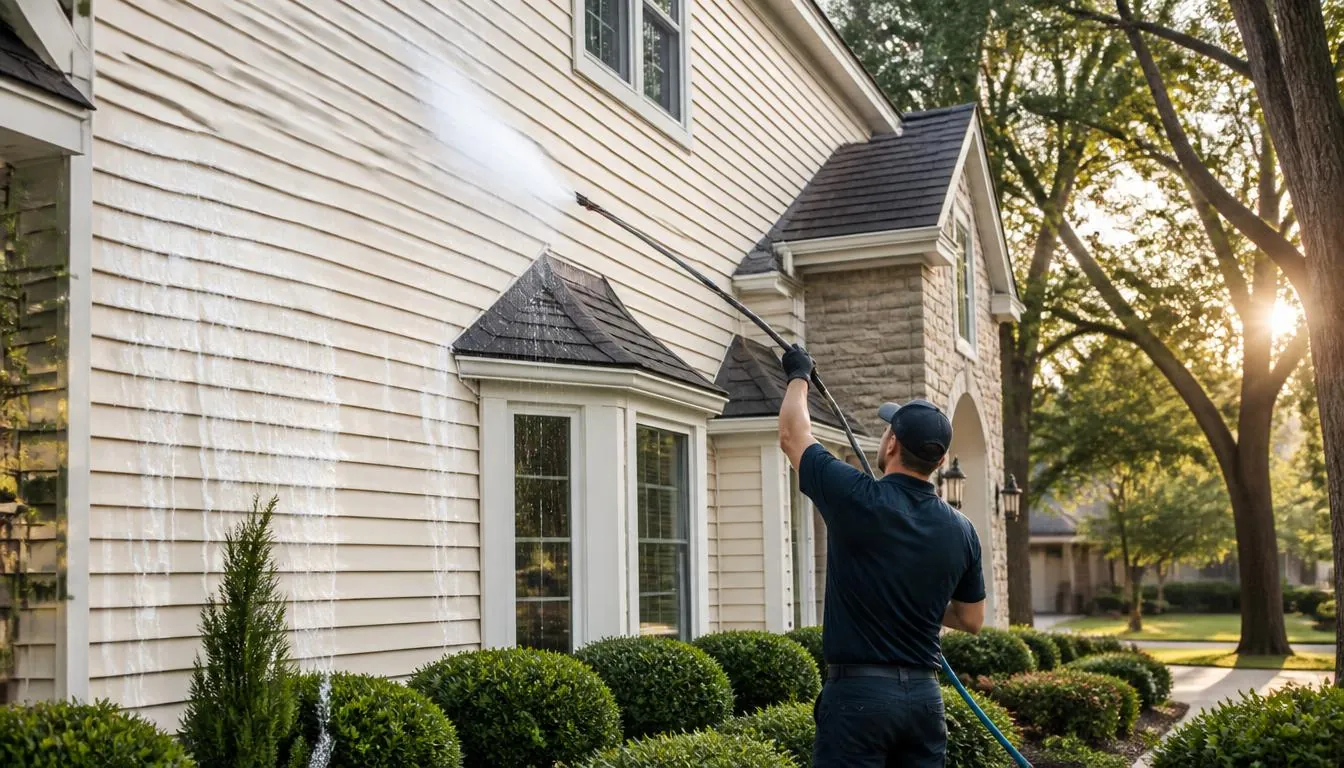
Vinyl siding, painted wood, stucco, and even some fiber cement products aren't built to withstand direct high-pressure impact. Pressure washing these surfaces can force water behind siding panels, strip paint, crack stucco, and etch wood. That damage often doesn't show up immediately but shortens the material's lifespan considerably. It's common to see homes where a well-intentioned DIY pressure wash left streaking, gouging, or moisture intrusion that costs far more to repair than a professional soft wash would have cost in the first place.
What Soft Washing Does Instead
Soft washing uses low pressure combined with a specialized cleaning solution to break down algae, mildew, mold, and organic staining at the surface, then rinses it away gently rather than blasting it off. It's the correct method for siding, painted surfaces, stucco, and anything else more delicate than concrete or stone. The result is often a more thorough clean than pressure alone could achieve, because the solution treats the organic growth causing the staining instead of just knocking loose what's visible.
How to Know Which One Your Home Needs
As a general rule:
- Pressure wash: concrete driveways, paver patios, stone walkways, brick surfaces
- Soft wash: vinyl or fiber cement siding, painted wood, stucco, screens
Most homes actually need both: pressure washing for the hardscape, soft washing for the structure itself. That's why a proper exterior cleaning visit isn't a single technique applied everywhere, but a method matched to each surface.
Surface by Surface on North Texas Homes
- Stucco: common across DFW and porous, so it calls for low pressure and the right solution.
- Stone and brick veneer: the face can handle more than stucco, but mortar joints can be damaged by high pressure.
- Painted wood trim and fences: low pressure to protect the paint and grain.
- Fiber cement siding: follow the manufacturer's cleaning guidance, which typically calls for low pressure.
- Concrete driveways and walkways: well suited to pressure washing.
- Pavers: clean carefully to protect the joints, then consider paver sealing to make future cleaning easier.
- Windows and screens: handled gently, as part of window cleaning.
Why North Texas Homes Get Stained
Shaded, north-facing walls stay damp longer and grow mildew and algae. Sprinklers spray minerals and soil onto lower walls, and rain splashes dirt up from beds and bare soil. Homes near busy roads also collect a darker film from traffic, which we cover in our post on Coppell and Irving properties.
The Hidden Cost of DIY
Beyond visible damage, high pressure can drive water behind siding where it isn't seen until problems develop. Some siding manufacturers specify how their product should be cleaned, so the wrong method can cause problems with coverage. And ladder work with a pressure wand is a real safety risk. Saving a weekend isn't worth either.
Why the Right Equipment Matters
The equipment and solutions used matter as much as the method. Commercial-grade systems allow a technician to control pressure output by surface, and the right cleaning solution, applied with care, breaks down organic growth while protecting landscaping. This is the difference between a service that cleans your home and one that risks damaging it in the process.
How Often Should Siding Be Cleaned?
There's no single schedule that fits every home. Walls in heavy shade, near sprinklers or under trees usually need attention more often than open, sunny walls. If green or dark staining keeps returning, or a film is dulling the color of your siding, it's time for a soft wash.
Pairing It With Other Services
Soft washing pairs naturally with window cleaning, since rinse water and lifted grime can spot the glass, and with pressure washing driveways and walkways during the same visit. One visit that covers the structure, the glass and the hardscape leaves the whole exterior finished at once.
What to Ask Before You Hire
- Which method will you use on each surface, and why?
- How do you protect landscaping, windows, fixtures and pets?
- Are you insured?
- Will I see the finished result before you leave?
For a broader checklist, see what to check before you hire a professional cleaning company in DFW.
Timing Matters Too
Exterior washing works best in mild, dry weather. In winter, hold off on washing flatwork when a hard freeze is in the forecast, since water can freeze into a slick film. Our North Texas winter exterior checklist has the details.
Ready when you are. Get Your price in 5 minutes.


About Topline Exteriors
A locally owned team caring for North Texas homes and properties.
Meet the teamKeep reading
Related posts

Seasonal
The North Texas Winter Exterior Checklist: What to Clean Now and What to Wait On
October 10, 2026 · 3 min read
Pressure Washing
Why Coppell and Irving Properties Face a Different Pressure Washing Challenge Than the Suburbs
September 5, 2026 · 5 min read
Property Management
How Often Should a Commercial Property Get Pressure Washed? A Guide for Facility Managers
September 5, 2026 · 5 min read