
Property Management
What HOAs in Prosper and Frisco Should Know About Exterior Maintenance Schedules
Fast-growing communities often outpace their own maintenance planning. Here's what property managers in Prosper and Frisco should have in place before small issues become resident complaints.
In this article
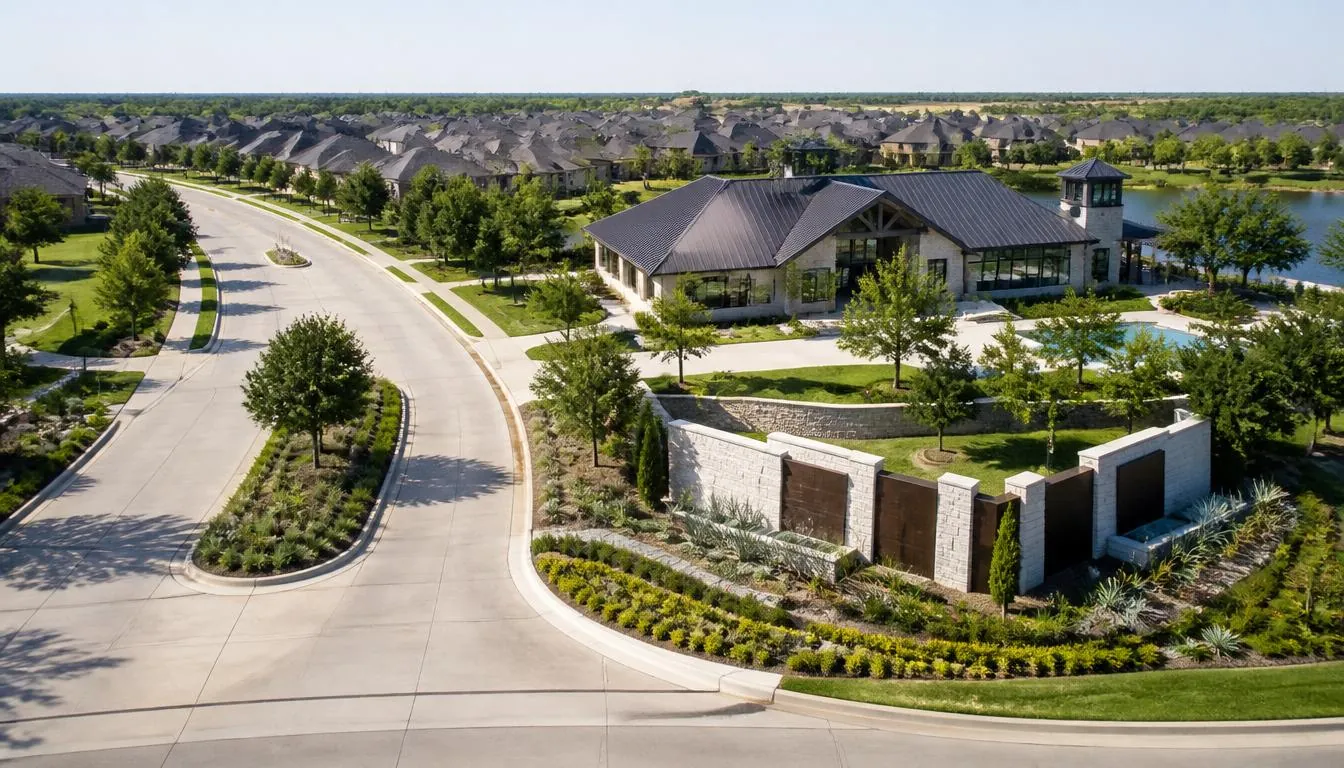
Prosper and Frisco are among the fastest-growing communities in North Texas, adding new residential developments at a pace few areas match. That pace creates a common gap: HOAs and property management companies overseeing newer developments often haven't yet established a formal, recurring maintenance cadence for shared exterior elements, because the community itself hasn't existed long enough to need one yet.
Growth Outpaces Infrastructure Planning
Many of these communities are still transitioning from builder-managed common areas to resident-run HOA boards, and that handoff rarely comes with an established maintenance calendar. Without a routine cycle already contracted, exterior upkeep tends to happen reactively, after a board member notices an issue, rather than on a schedule that catches problems before residents do.
The Areas Most Often Overlooked
A few categories consistently fall outside standard maintenance contracts until a resident brings them up.
Paver sealing. Community entrances, walking paths, and pool decks with paver surfaces need periodic sealing to prevent color fade and surface erosion. Left too long, resealing becomes resurfacing.
Amenity center glass. Clubhouse and pool-area windows see heavy use and are highly visible, but rarely fall under a resident's or landscaper's scope, leaving them the most neglected glass surface in the community.
Entrance signage and monument features. These are the first impression for prospective buyers and visitors, but frequently go years without a proper cleaning cycle.
More Shared Elements to Put on the Calendar
- Pool decks and amenity flatwork, which collect algae, sunscreen residue and mineral staining
- Clubhouse and amenity center gutters
- Clubhouse interiors, which can be covered by recurring janitorial cleaning
- Mailbox kiosks, benches and shade structures
- Holiday lighting at entrances and monuments, installed and taken down on schedule
Why Proactive Beats Reactive
A maintenance schedule built in advance protects two things a reactive, complaint-driven approach can't: property values and management's reputation with the board. Waiting for a resident to flag stained pavers or dirty amenity center glass means the issue was already visible long enough to notice, and by then, the fix usually costs more than routine upkeep would have.
A Sample Annual Calendar
- Late winter to early spring: pressure wash entrances, monuments and pool decks before pool season
- Spring: amenity center glass; paver sealing during mild, dry weather
- Summer: mid-season pool deck and glass touch-ups
- Fall: clubhouse gutters after leaf drop; glass before the holidays; holiday lighting installs
- Winter: lighting takedown; hold off on flatwork washing when freezing temperatures are forecast
Our North Texas winter exterior checklist explains the cold-weather timing in more detail.
What Boards and Managers Should Put in Writing
- Scope broken out by element: entrances, monuments, pool deck, amenity glass, gutters
- Frequency for each element
- Scheduling windows that avoid peak resident hours
- Photo documentation of completed work
- A certificate of insurance on request
- A plan for notifying residents before work begins
Communicating With Residents
A short notice before pool deck or entrance cleaning goes a long way. Early weekday mornings usually work best, with clear signage while surfaces dry. Residents who know the schedule are far less likely to treat a cleaning crew as a surprise or a complaint.
Budgeting for It
Recurring maintenance belongs in the annual operating budget, separate from long-term reserve projects. Predictable visits are easier for a board to approve than emergency fixes, and they keep small issues from turning into reserve-level repairs.
When the Builder Hands Over Common Areas
The handoff from builder to HOA is the best moment to set a baseline. Walk the common areas with the builder's representative, photograph entrances, monuments, pool decks and amenity glass, and note anything that already needs attention. A first cleaning right after handoff gives the board a clean starting point and a record of the condition it inherited.
Getting Ready for Pool Season
Pool season is when amenity areas get the most use and the most attention. Scheduling deck cleaning and amenity glass a few weeks before opening day gives surfaces time to dry and leaves room to reschedule around spring rain.
Keeping the Board Informed
Boards change, and new members won't know what was done last year. A simple maintenance log with dates, photos and notes for each element makes it easy to show what the community is getting for its budget and to plan the next year's calendar.
Questions to Ask a Maintenance Vendor
- Can you handle several elements, such as entrances, glass and pool decks, under one schedule?
- How do you document completed work for the board?
- Can you provide a certificate of insurance?
- How do you schedule around residents, pool hours and events?
- Who is our point of contact between visits?
Setting Up a Commercial Maintenance Plan
Community and commercial contracts work differently than single-property service. Instead of a one-time appointment, we build a recurring schedule tailored to the property (quarterly, biannual, or seasonal, depending on the elements involved) so the board has predictable costs and residents never see a maintenance gap. If your community doesn't currently have this in place, it's worth a conversation before the next growing season adds it to the list of visible issues. Get Your price in 5 minutes.
For Communities Still Under Construction
If phases of your community are still being built, coordinate cleaning with the builder's schedule so finished areas stay presentable. See our guide to scheduling post-construction cleanup and our post-construction cleaning checklist for builders.


About Topline Exteriors
A locally owned team caring for North Texas homes and properties.
Meet the teamKeep reading
Related posts

Property Management
The Post-Construction Cleaning Checklist for Builders and General Contractors
October 10, 2026 · 3 min read

Trust & Credentials
What to Check Before You Hire a Professional Cleaning Company in DFW
September 12, 2026 · 5 min read
Property Management
A Property Manager's Guide to Scheduling Post-Construction Cleanup on New Developments
September 1, 2026 · 5 min read